
By Trevor McCauley
It has been said 10% of life is what actually happens to you and 90% is your reaction to what happens to you. That being said, our thoughts can have a significant impact on our lives. When you strip away all the things we add to life, what we are left with is pretty simple. Unfortunately, when dealing with mental illness, I have had a hard time resolving this fact of life.
I’ve found that in the early stages of a diagnosis, what is happening in the 10% of life is intense, chaotic, and difficult to deal with when you don’t know how to react to it. Reactions to life in difficult times are often met with confusion because, in all honesty, no one is in your shoes. And without support from group therapy or a small group, life can really feel like standing on shifting sand.
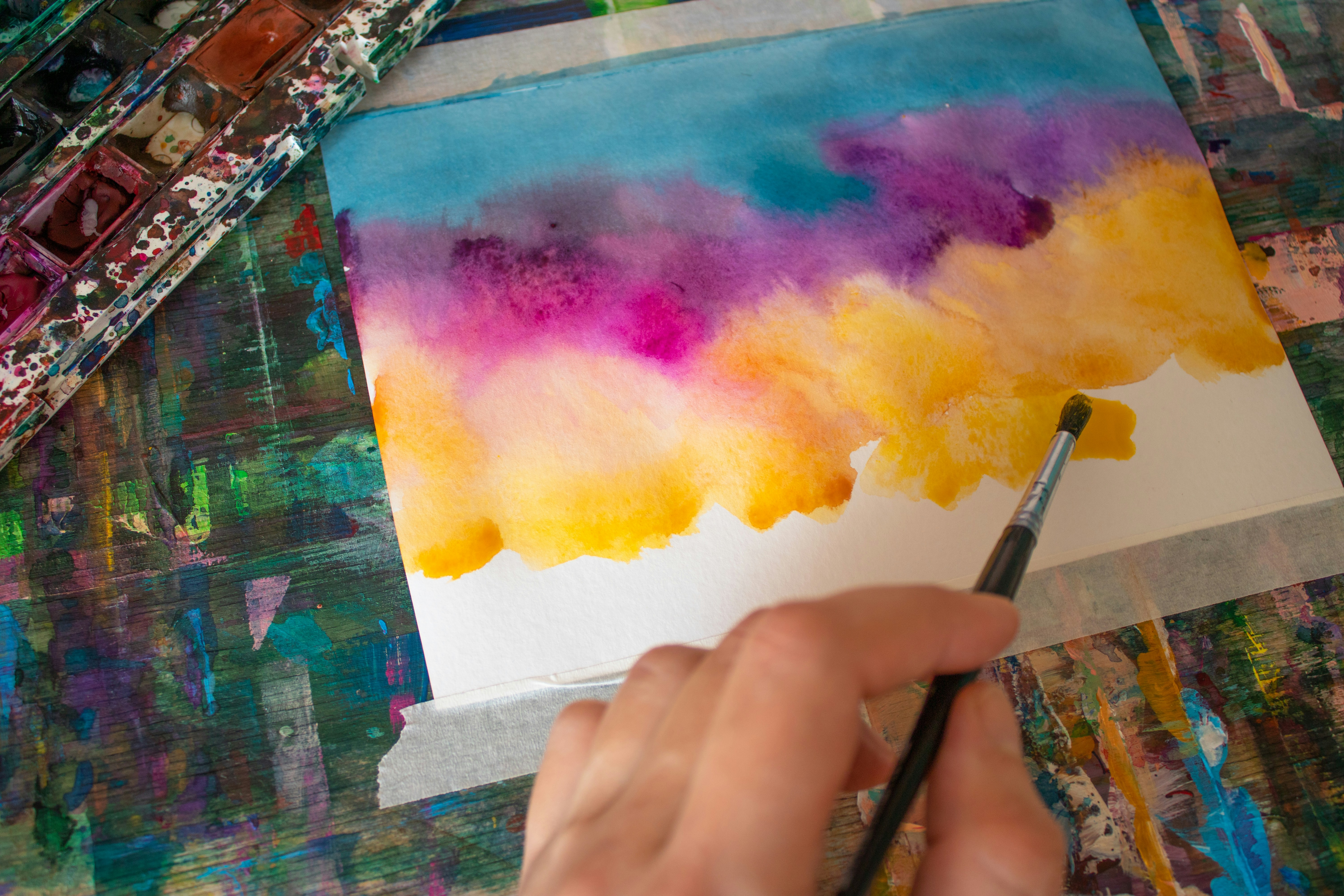
In my experience, when you have a mental illness it can be difficult to distinguish between your thoughts and the life beneath those thoughts. Essentially, life is a blank canvas. Ultimately, our thoughts color our canvas or our mental landscape like paint. If our attitude is positive or negative, whether our outlook on life is good or bad, these approaches or thought-bundles color and layer the canvas. Our actions then build our life and composition into a three dimensional life portrait.
Mental illness has a way of scrambling this picture. It can jumble your thought processes, and has a way of burying emotions to where colors are muddied, buried, or cloaked. And the process of unpacking these thoughts and emotions is not an easy task. It’s these piles of colors, this noise that can make mental illness very difficult to analyze on your own. Furthermore, in times of crisis, finding anyone else that can make sense of this very abstract painting is a very tenuous process.
But simplicity, and a clear sound can be detected amidst the confusion. I found that understanding your life picture can take the forms of many treatments. Doctors, therapists, support groups, are all ways that when you become honest with yourself, and start communicating your thoughts and feelings with others. It is possible to begin to be more intentional about how you are painting your canvas.
Just the act of speaking to others is a huge step. I know, for me, I also had to learn to write out my thoughts and feelings, and I had to become more open with myself. When you can begin to unpack all this, a simpler picture can begin to emerge. You can begin to see how you are reacting to life, and then eventually you can see the power you have to choose a new thought, a new way of painting your picture intentionally and with purpose.
I believe this process of opening up to treatment is a critical step to achieving a healthier, more aware life. When I took ownership of my emotions and my thought life, it empowered me to live with more focus and more direction. It’s a process that can transform your life and the world around you. The picture you paint can be beautiful.
Life can truly become something that renews and invigorates our life from the inside out. And taking small steps each day fine tunes not only the direction but the intentionality that helps us cope through the trials that face us. With new focus we react differently to that 10% of life. I have found that when we begin to react differently to whatever we are going through, our lives can change, our relationships can heal and can grow. It’s not an overnight process. There are many ways in which I am still learning to be more responsible in how I react to family situations or just handling life through things like job changes and getting along, reacting with intention to coworkers and my boss.
But I’ve found that when we react differently, our understanding of who we are is transformed and we gain the strength to take on life’s challenges and develop a resilience that is empowering.
Trevor was born and raised in the Metro Detroit area. He was diagnosed with Bipolar Disorder during his first semester at the University of Michigan. After the diagnosis, Trevor began the journey of rebuilding his life and identity from the ground up. That process, he freely admits, is still ongoing. Trevor returned to the University of Michigan in the fall of 2001, and completed a bachelor’s degree in 2004 from the School of Natural Resources and the Environment. Now, he continues to pursue many creative outlets including blogging, creative writing, photography, music, and fine art amongst others. He currently lives in Northern Michigan with his wife and two children.
Thank you. This is wonderful. Inspiring!
Very well written! Thank you for sharing your story.